
Our model
Small troops. Steady rhythms. Real growth.
Everything at SparkTroops happens inside a troop: a small, consistent group of Troopers and trained volunteers that meets regularly and grows together.
What is a troop?
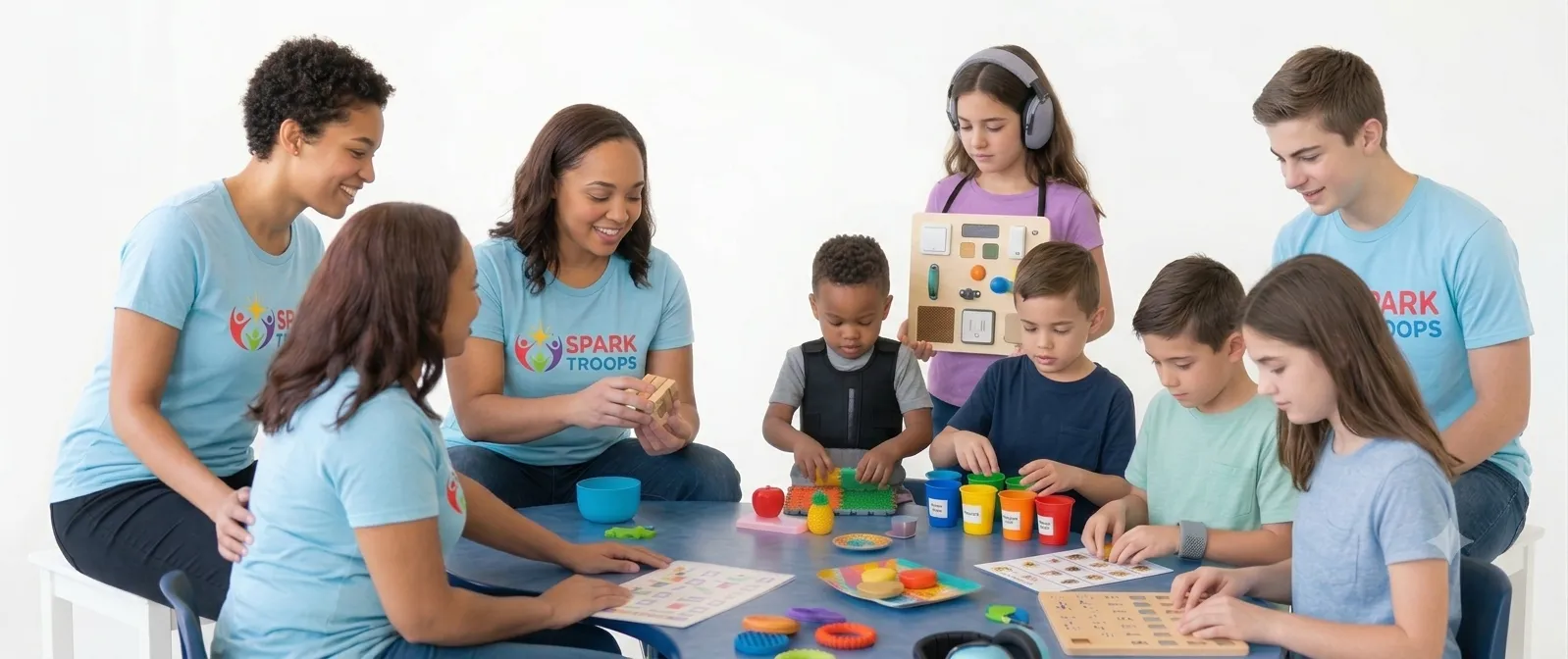
A troop is a small group of Troopers — kids with developmental disabilities from the same local area — and trained Troop Volunteers, supported by a trained adult Troop Leader. Everyone belongs to the same troop, contributes in their own way, and grows through the connections they build together. The group stays together session after session, giving trust and friendships time to develop.
Troops belong to chapters organized by county, and every troop is led by a trained, background-checked Troop Leader. Most troops are formed around a school district; where that is not practical, one troop brings together Troopers and volunteers from several nearby townships. Spark Troops organizes troops based on local need and availability, so the community a family joins is always close to home. Programs and activities are free for participating families.
Who is in a troop
Kids
Troopers
Kids with developmental disabilities from the local area. Every Trooper belongs to one troop and takes part in their own way.
High school students
Troop Volunteers
Teens who join the troop as peers. Before their first session, every Troop Volunteer completes Spark Troops training on their role, expectations, safety guidelines, and how to help create an inclusive, welcoming environment.
Adults
Troop Leaders
Trained, background-checked adults who plan and lead every session, and stay available for guidance and support throughout.
Families
Parents and caregivers
Present at every session. Families stay on-site — this is never a drop-off program — which keeps sessions safe and lets parents see the troop grow.
How a troop session comes together
Once a troop has been formed and its Troopers, Troop Volunteers, and Troop Leader are enrolled, the group can begin planning its sessions. Every session follows the same five steps.
Planning the session
The Troop Leader schedules each session around the availability of the Troopers, Troop Volunteers, families, and the meeting location. Sessions take place at accessible community locations such as libraries, community centers, parks, recreation facilities, and other appropriate local spaces.
The Troop Leader also prepares a list of activities for the session — board games, arts and crafts, group games, outdoor activities, creative projects, or other social and recreational activities. Troopers and Troop Volunteers are welcome to suggest or bring appropriate games or activities they would like to enjoy with the group, so sessions reflect the interests of the people in the room rather than following the same fixed program every time.
Sharing the session details
Once the session is scheduled, families and Troop Volunteers receive the details, and the same information is always available on their Spark Troops dashboard: the date and time, the location, the planned activities, attendance information, and any important updates or instructions.
Email reminders and updates keep families and volunteers informed if the schedule, location, or session details change.
Arriving at the session
When Troopers and Troop Volunteers arrive, the Troop Leader welcomes the group and reviews the plan for the session — explaining the activities, giving any necessary instructions, and helping organize the group so everyone understands what they will be doing.
Volunteers and Troopers participate together
Once the activities begin, Troop Volunteers help carry out the session by taking part directly alongside Troopers. They might play a board game together, complete a craft, join a group activity, talk, work on a project, or share another activity. The Troop Leader stays available to provide guidance and support, while the volunteers focus on engaging with Troopers and helping create an inclusive group experience.
The goal is not simply to complete an activity. Activities are a natural way for Troopers and volunteers to spend time together, communicate, have fun, and gradually build relationships.
Building consistency over time
Each session follows the same overall process, while the activities change with the interests of the group. As the same Troopers, volunteers, and leaders keep meeting, everyone becomes more familiar with one another — and over time the troop grows into a consistent local community where everyone knows they belong.

Recognition, earned the same way
Everyone in a troop earns recognition the same way — by showing up and taking part. Volunteers and Troopers alike are celebrated for participation, effort, and consistency, never for being better than anyone else. It is an equal reward system: the point is belonging and growth, side by side.
High school volunteers earn meaningful service hours while building skills, confidence, and experiences they can carry into college applications, first jobs, and beyond.